Jewellery as histography
Vol. 1
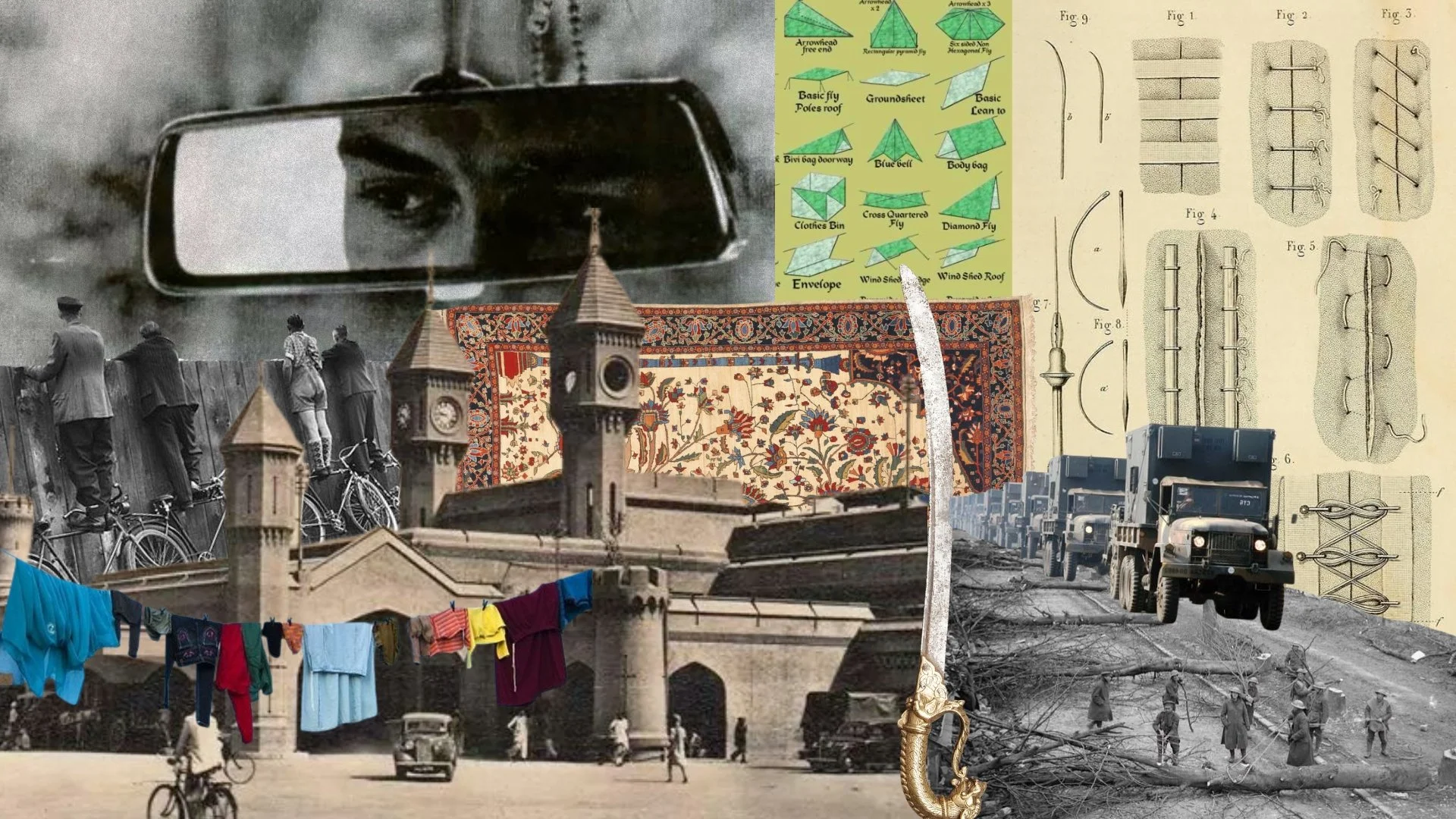
The collage is a visual story of a documented journey from a surviver I interviewed in 2023. This went on to be the inspiration to my first collection.
The rear view mirror: represents the moment the family piled into the car and looked through the mirror to see the men coming to kill them.
People on bikes looking over the wall: Represents the people who looked on in safety and the British leaving.
The Lahore train station: An ode to those on all sides that became the martyrs, slaughtered in transit.
The washing line: Representing the clothes on the families backs when they left, they were not allowed to change, they were not allowed to take with them anything but their clothes.
The prayer mat: facing east, always thankful.
Tarp tent examples: This represents an Amaji, using her Sari to cover children to protect them from the rain when they stopped at a refugee camp.
The sword: between the railways station and the fallen trees, the sword represents those who brandished them.
The fallen trees: The fallen trees by the men who lay them in the road to stop us and the hurdles the family had to overcome to reach safety.
The convoy of trucks: represents the trucks that took the woman and children and left the men behind.
The stitching: The ways in which we try and heal from our history and how it can be visible.
Scroll to see the collection…
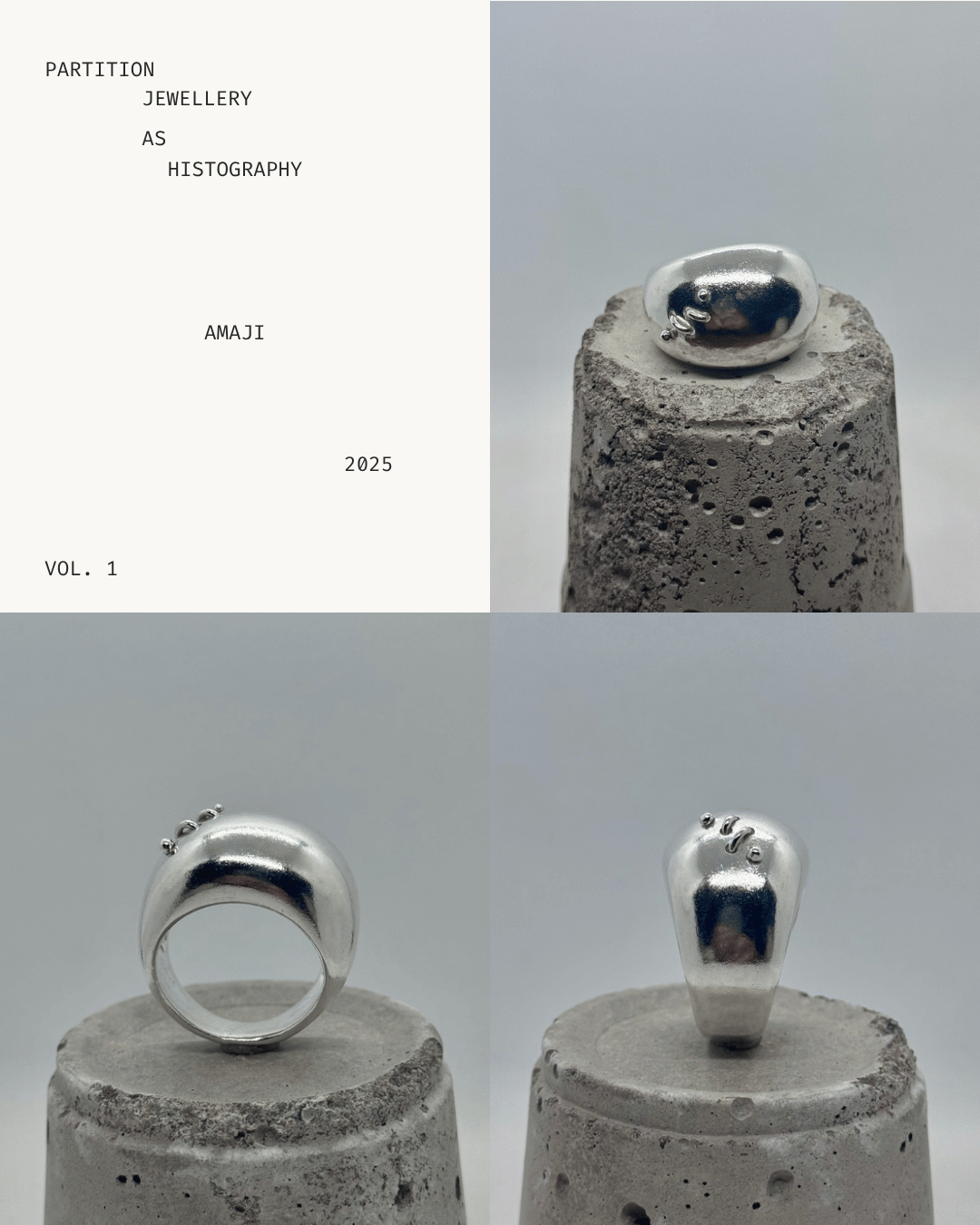
This is Amaji. It draws on the maternal as a figure of shelter. The domed form encloses and protects, while the knitted surface gathers wounds together, holding them in place. In silver, these repairs become precious, damage is not hidden, but carried.
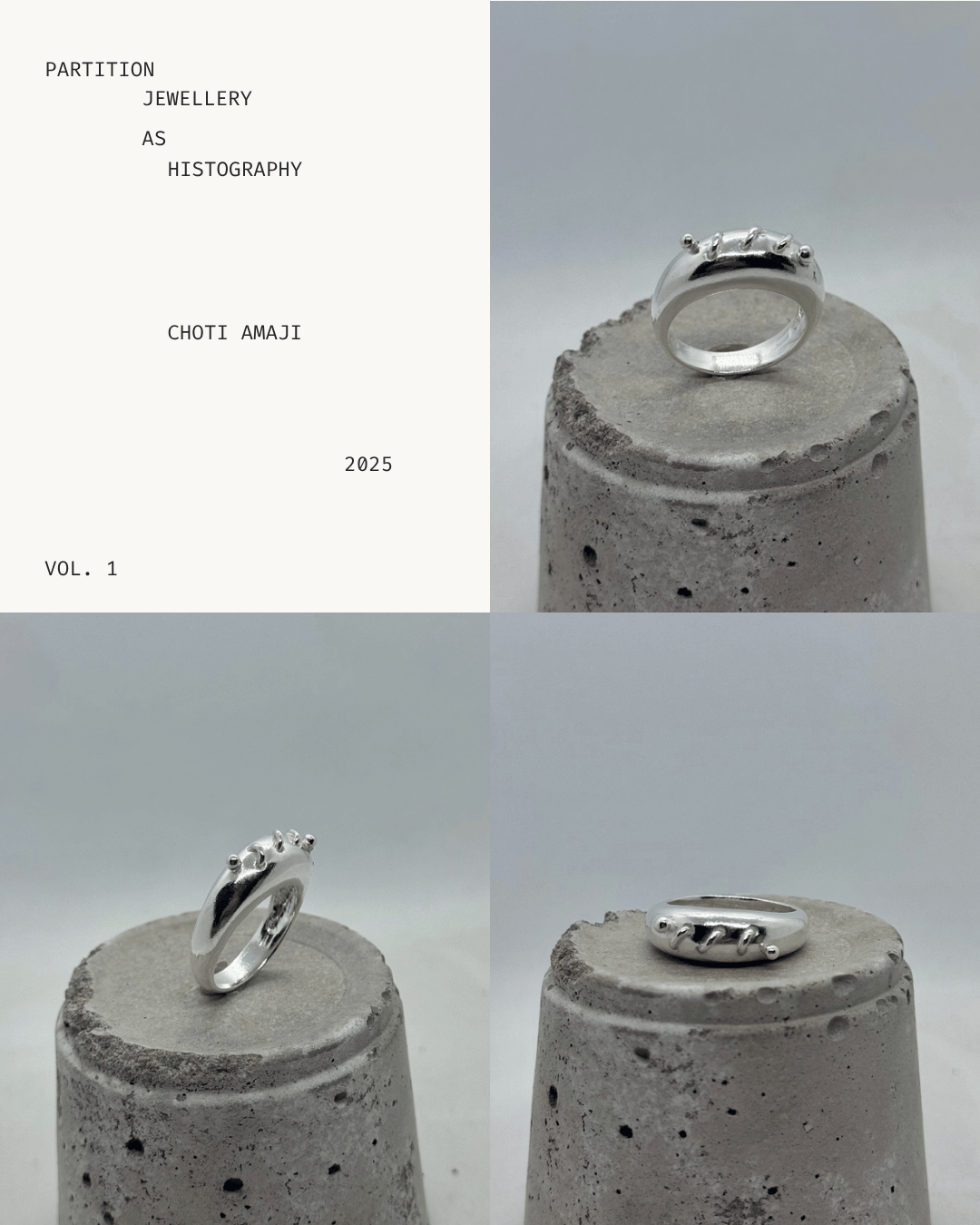
Choti Amaji echoes Amaji in reduced form. The dome still shelters, but the stitching dominates, drawing attention to repair. Wounds remain visible, held in silver as an intimate, carried fragment.
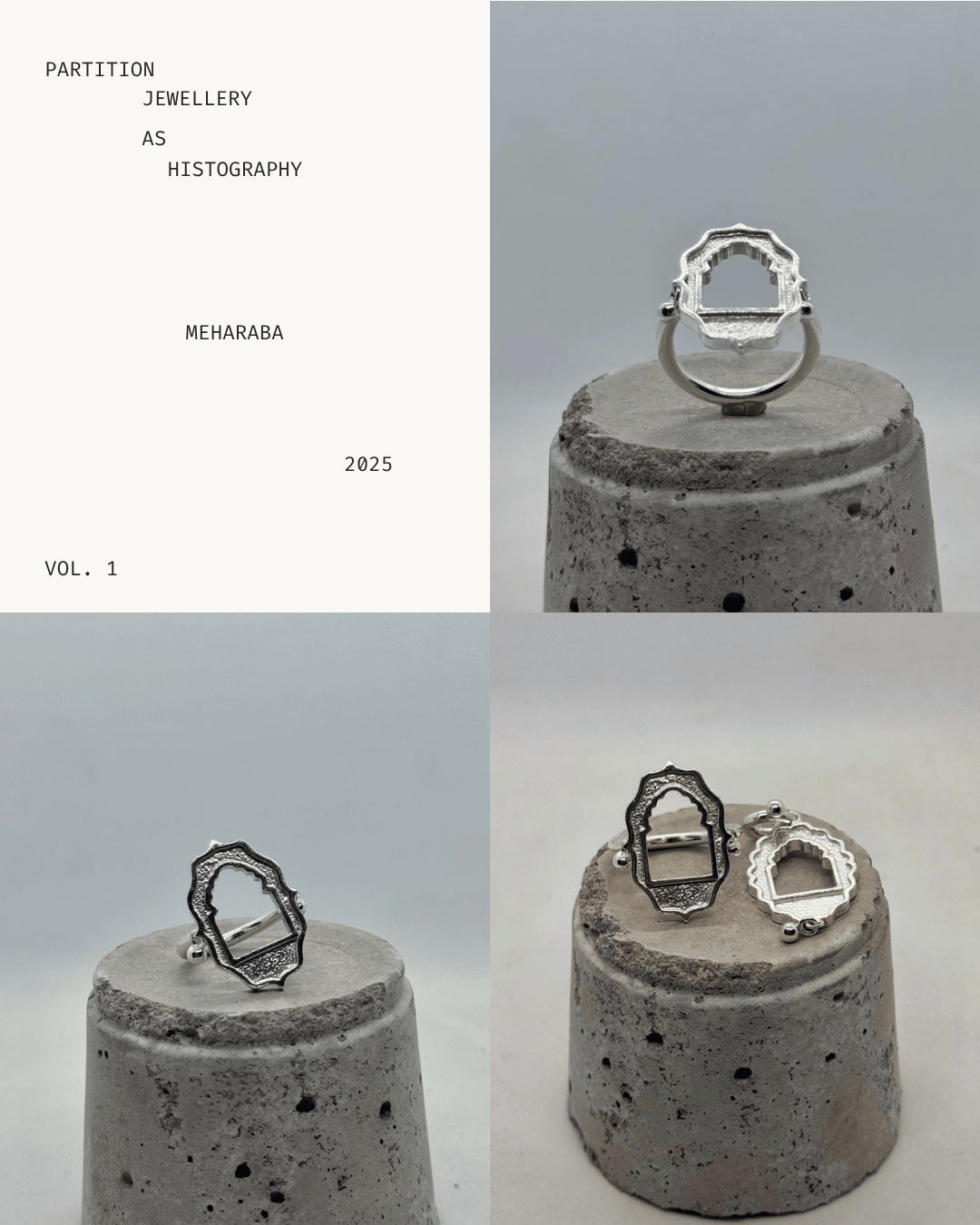
Meharaba reworks Mughal arches into wearable thresholds. These openings frame the past, holding those who came before. Kinetic elements jingle with movement, echoing the layered jewellery of aunties, their presence carried with us.
Meharaba reworks Mughal arches into wearable thresholds. These openings frame the past, holding those who came before. Kinetic elements jingle with movement, echoing the layered jewellery of aunties, their presence carried with us.
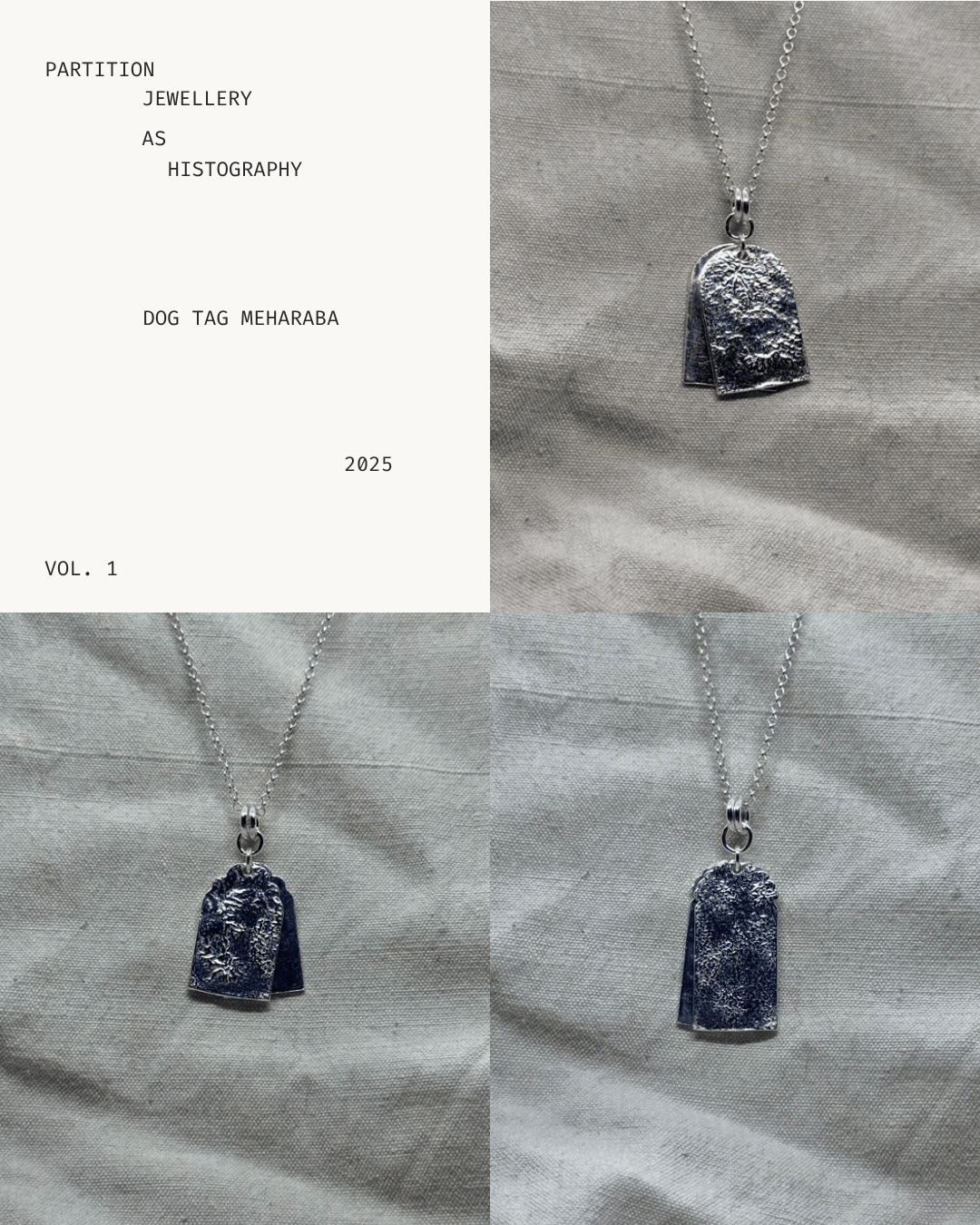
Meharaba Dogtags use paired, layered forms that rest together. The Mughal arch is closed, holding what cannot be spoken. The surface appears scorched and altered, not repaired. Damage is carried as a gesture toward healing.
An archive…